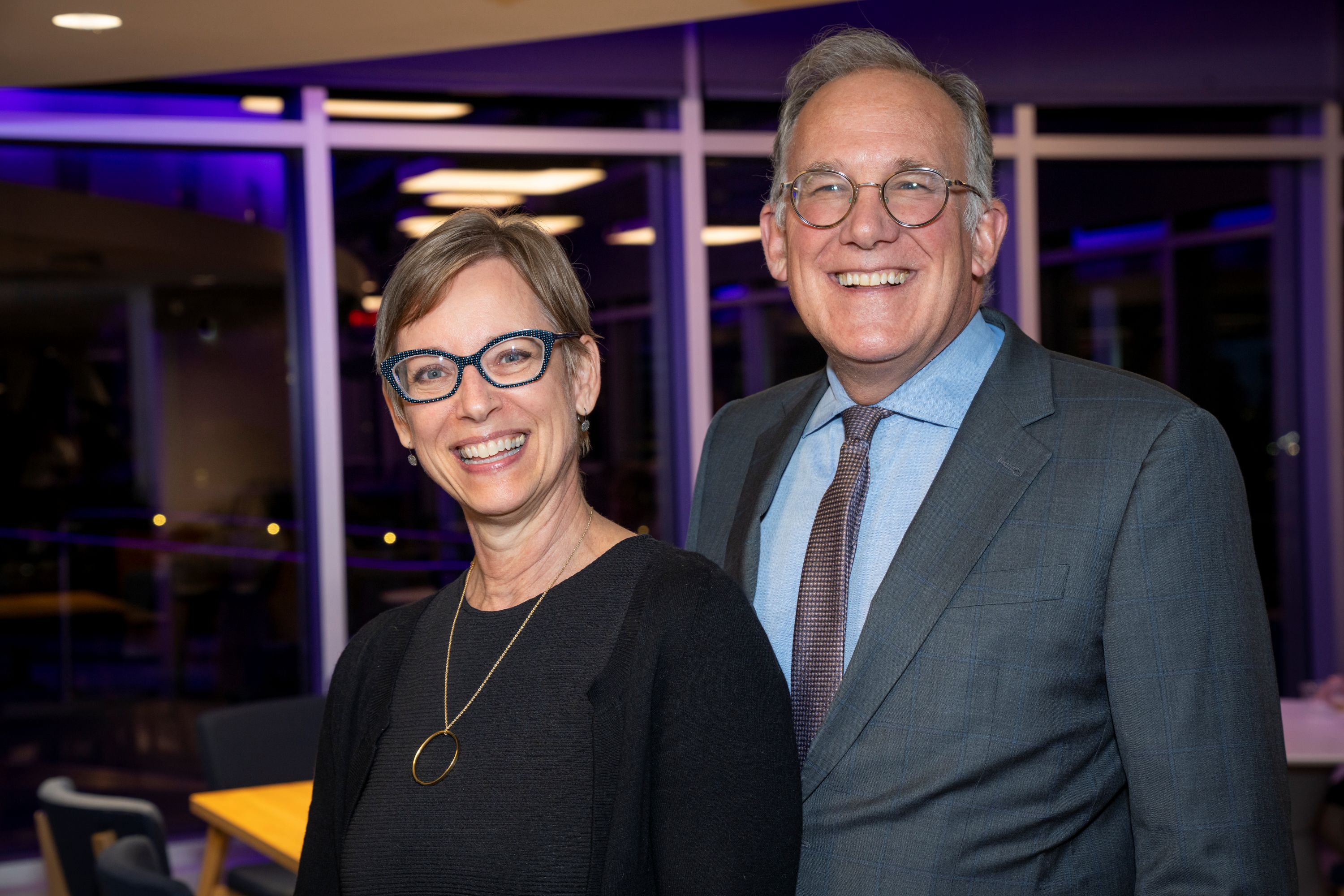
Augustine (Gus) Faucher, Ph.D. and Amy Crawford-Faucher, M.D.
Gus Faucher and Amy Crawford-Faucher bring unique perspectives to their roles as Tocqueville Society Co-Chairs. Gus is chief economist for the PNC Financial Services Group. Amy, a family physician, chairs the Primary Care Institute and Department of Family Medicine at Allegheny Health Network. We asked them about their work and what they wish people knew about United Way.
You’ve been married since 1990. How did you meet?
Amy: I had just applied to transfer from Wells College to Cornell when we met at a party. We were both 19. Gus was a sophomore at Cornell at the time.
Gus: On one of our first dates, I accompanied Amy to her biology lab job so she could feed mice to the boa constrictor. It was a bit gruesome but I was impressed that she was interested in science!
Amy: After college we spent a year apart. I worked at a hospital in Boston and Gus spent a year volunteering with the Jesuit Volunteer Corps in San Antonio, Texas. Pre-cellphone, we could only afford one phone call a week so we wrote a lot of letters. It was a good way to really get to know one another.
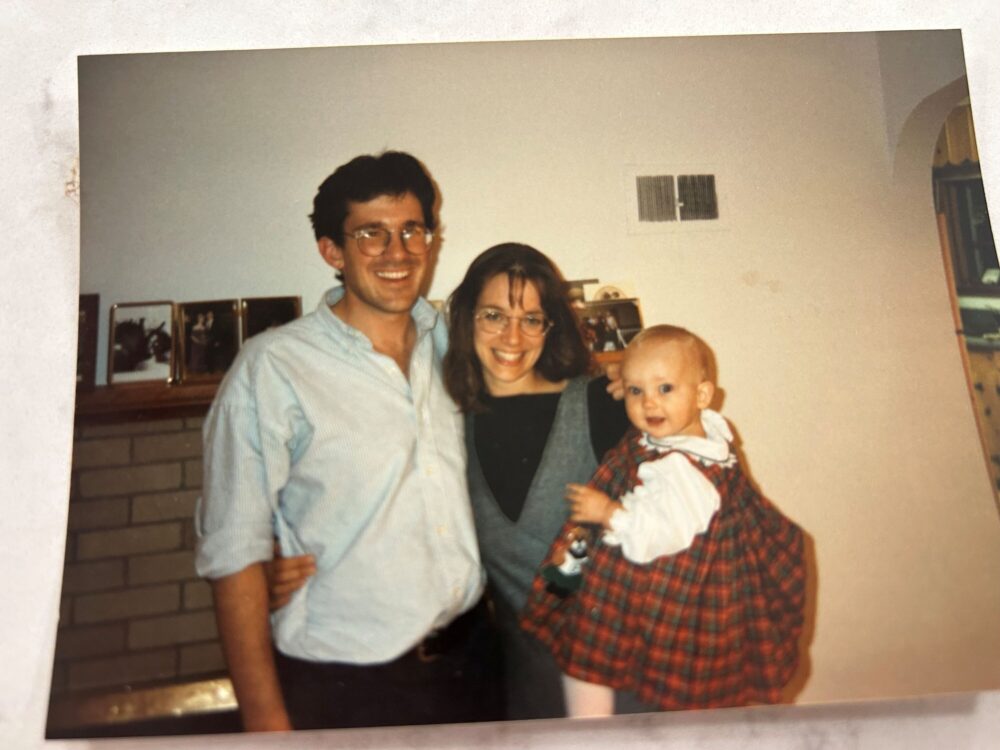
Gus, Amy and one-year-old Justine at the family’s house in Champaign, Illinois, circa 1994. Gus had a one-year visiting professorship at University of Illinois and Amy took a gap year between medical school and residency.
How did your experience growing up influence your views on charitable giving?
Amy: Money was often a stressor during my childhood – we had to get creative to feed and clothe our large family. Despite those challenges, my parents were dedicated to community service and generous with their time. Their most impactful project was starting the volunteer ambulance squad in our town.
Gus: I saw my parents serve on nonprofit boards. After my dad retired, he became involved with the Suicide Prevention Lifeline Philadelphia crisis hotline and received their volunteer of the year award.
We’re constantly talking about the 38% of people regionally who live at or below the ALICE (Asset Limited, Income Constrained and Employed) threshold and workfull-time but don’t earn enough to pay for the essentials. Does the ALICE population influence your work?
Gus: My job with PNC is primarily to think about the broader economy. How well are people doing and what does the job market look like? We’re looking at conditions for hundreds
of millions of people. What’s true for the broader economy may not be true for all groups, such as ALICE. Amy is constantly reminding me that these groups are composed of actual people. But I am looking at issues like household incomes and the effect of inflation on families.
Amy: He’s right. Gus thinks about the slices of the economy. I think about individuals. Growing up with a taste of economic insecurity has helped me meet patients where they are. We also assess social determinants of health in all of our patients so that we can connect them to resources when needed.
When you think about United Way’s investment priorities, which is most important to you and why?
Amy: All are important and interrelated, but if you’re looking at the hierarchy of needs, it is basic needs for me. It’s hard to think about success in school and financial stability if you don’t have affordable food and shelter.
Gus: Thinking about how we build an economy that works for everyone over the long run, building for success in school and life is how we get there. Investing in providing people with the tools to succeed in the economy is vital.
What do you wish people understood about United Way?
Amy: I wish folks could see the thought process that goes into vetting and awarding Multi-Year Grants. It’s about hearts and souls, but it is also a highly organized and data-driven process, which gets the money to where it can make the biggest difference.
Gus: I would add the importance of unrestricted giving, meaning giving to United Way without limiting which agencies will benefit. There are so many issues crying out for attention. By giving without restrictions to United Way, the staff utilize the funding much more efficiently than I could on my own.